|
|
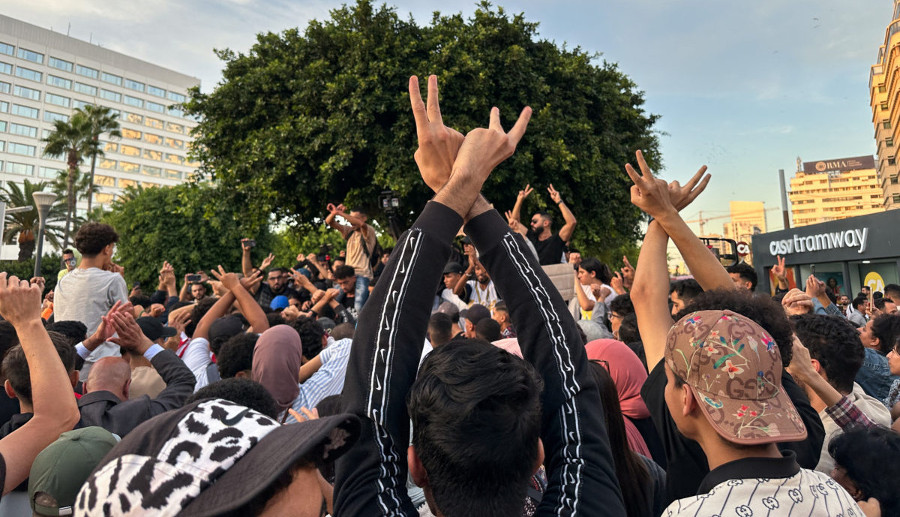
Morocco’s Youth Protests: PM Akhannouch Calls for Dialogue Innocent Semosa: Yeah, indeed. I mean, there’s a general narrative out there that the protests in Morocco are being driven by anger over corruption, inequality, and public spending priorities. Now, from a political economy perspective, what structural issues, Professor, make these grievances so persistent in Morocco? Patrick: Oh, well, it’s such an interesting mix because we’re seeing these same phenomena cause uprisings everywhere at a repeated rate now. And the Moroccan regime — the king and his civil service — put down the protests and made some concessions. If you recall, in 2011, the first big wave of protests in North Africa. And at least now what has apparently set it off is a series of, you know, let’s say, decisions by a corrupt government. And it’s no surprise to me that some of these include the Abraham Accords, which are the deals that the Moroccans did in the first Trump government with Israel. And now that Israel is on everyone’s mind as a genocidal state, it’s no surprise to see the kafiyyah, the Palestinian solidarity symbol, the scarf, on many of the demonstrators’ necks. But also the excess spending on the World Cup. This is the biggest stadium for the 2030 World Cup. It’s going to be shared by Portugal, Spain, and Morocco. It’s the Hassan II Stadium, with 115 000 seats, not too far from Casablanca. And then, on top of that, just a general decline in services — one that we’re seeing across Africa as the debt crisis hits. U.S. aid has dramatically cut foreign exchange support to some African states. With the decline in trade that goes to the U.S. because the Africa Growth and Opportunity Act has now been cut, that means, again, a shortage of forex required to pay high foreign debts. And so, across Africa, I would call this, Innocent, the ‘IMF riot’ that we had seen first in the 1980s and then in the 2000s. And in each case the mix of repression, which then causes more protests, more riots, more angry citizenries — plus to some extent the hope for debt relief — has not been enough. Trevor Manuel, in charge of this within the G20, still hasn’t done enough to stave off the anger from below. And it’s not only Morocco, of course, but several other states in Africa that are boiling with anger. Innocent: Yeah. And Professor, I wonder where the money comes from to build that stadium — whether or not it’s from FIFA or the government — because there’s a need for clarity there, and there’s a need for a balancing act. I mean, we need beautiful stadiums, but at the same time people need to get basic services on the ground. But the question then is: to what extent are the protests a symbol of a wider generational crisis, where digitally connected youth feel excluded from political and economic life? Patrick: Yes, that’s right. But let’s just quickly ask that question about whether the World Cup is a good investment, or a sort of bread-and-circuses distraction from the problems. We had it in 2010: hosting the World Cup. First of all, a bribe by FIFA — the local organizing committee, led by Danny Jordaan, who apparently authorized $10 million to bring in the Caribbean Football Association with the U.S. – that was a $10 million bribe, that was prosecuted in the U.S. But South Africa got off and never had an answer to that. But it was admitted that we had to out-bribe Morocco, which had bribed the other African countries. And then, who builds these stadiums? Well, taxpayers do. They have to pay it off over time. And we’re left in South Africa, for example, with lots of empty stadiums that couldn’t pay for themselves — all the promises, all the hype. And then FIFA took, in our case, about $3.2 billion worth of profits back to Switzerland. Now, those are the sorts of conditions that I see all across the continent, where multinational corporates especially are taking advantage of the minerals. Our gold is the most important here in South Africa. We’ve got a huge gold stock still, even though underneath Johannesburg we mined about half the world’s historic gold over a century and a quarter. But the fact that we’re still seeing governments put more emphasis on foreign direct investment than on servicing people — that’s why, for example, in Kenya, when they put the taxes up in 2024 and that wasn’t resolved, we had major protests in June and July. We had them in Madagascar, we had them in Tunisia — especially led by workers. And then we can look at the rest of the world and find places like Nepal, Indonesia, Pakistan — up in flames. We’ve seen solidarity protests with Palestine in the last few hours and last few days across southern Europe, even in places where it’s very difficult to protest. The right to protest has been taken away for Palestine in places like Germany, England, and the United States. And yet, the surge of solidarity protests is there. People sympathize with Palestinians against the Israelis. Now, all of this put together — and I would add to that Greta Thunberg, the courageous young Swedish woman who represents, in a sense, the climate movement coming together with the Palestine solidarity movement — it’s a variety of things. And yes, you’re right: the social media phenomenon has allowed people to connect in ways they didn’t before. In 2011, we saw Tahrir Square in Egypt. We saw the Tunisians’ uprising in early 2011. Those are the sorts of things that were facilitated by Twitter and now by X, Bluesky, TikTok, and Instagram. But they’re protesting because of some very material reasons. And I think it’s always good, if you’re looking at a country, Innocent, to go to the IMF website. I just looked at the IMF website for Morocco, and they’re absolutely full of praise about the 3.9% growth of the Moroccan government. This is in the last report, that was issued in February this year. They didn’t have a clue that this kind of anger was bubbling — about the fiscal cuts, about the pressures associated with the lack of democratic expression that society is feeling — that it could erupt the way it has. I think it’s again IMF riot 2.0, as we’d seen in prior eras, and I don’t think it’s going to go away. Innocent: Yeah, indeed. Prof., I can imagine that the World Cup is a good investment when it’s done right for the economy, as you gave the example with South Africa’s 2010. But the fact that taxpayers will have to pay for this building project — I just can’t wrap my head around that But Prof., do you think Morocco’s political economy still relies on authoritarian stability, where economic stability is pursued without meaningful democratization? Patrick: Yes, they totally resist that democratization. In 2011, the king did make some minor concessions, but basically we’re looking at one of only two full-fledged monarchies, the other being Eswatini. And the fact is, Morocco is also a colonial power. It’s taken over Western Sahara next to it, and there are a lot of grievances about that. There’s a sense that Morocco really has an ethical problem. You see that with the way the Abraham Accords were agreed to, thanks to Jared Kushner, the son-in-law of President Trump, who went around in 2020 to do those deals. And yeah, people are very, very angry. You can just see that sense that the regime — the king — is much more connected to Washington and Tel Aviv than to the masses in the slums of Rabat and Casablanca and the other cities. It’s really a national movement of people, and in a sense, a symbol of a North African revival of that democratic spirit after it was crushed, especially in Egypt, in Libya, and in Tunisia. I think this will be seen as well. I think this could spur other activists, just the way the Kenyan Gen Z did, the way in Nepal and Indonesia the Asians are rising. And I think, around the world, there’s a sense that the oligarchs are out of control. And here in Johannesburg, at the G20, where we should be fixing problems like the climate crisis, public health, inequality, the need for coherent economics, coherent trade — we are failing to do so in this G20. I mean, we blame that, of course, on Donald Trump most of all, who comes to sabotage agencies. He’s not even going to come, but he inherits it next year. It just goes to show that our global leaders and national leaders are not up to the job of keeping our societies at least happy enough, and they are, at a very rapid rate, revolting. Innocent: Yeah, Prof., quickly, just before I let you go — as a parting shot. If we zoom out, Morocco is not alone. Tunisia, Algeria, and Egypt have also witnessed youth-led unrest in the last decade. What common economic patterns are driving disconnect across North Africa? Patrick: I think it’s neoliberalism. That’s the philosophy of the World Bank, the IMF, the big corporates, the United States government, and our government as well. Which means that the essence of policy objectives would be to attract more foreign direct investment, to privatize state services, to have a high interest rate to attract hot money, to liberalize trade, and to deregulate — and to really cut away the fat of the state. And that often cuts right into the bone and deep into the marrow, as we are seeing. I mean, South Africa isn’t really an exception, because we have, in addition to the countries you mentioned, the record rate of social protests, we have service delivery catastrophes, we have middle-class people, working-class people, poor people, all now coming out to the streets. And so I think until we get a different philosophy, one that’s based more on the social democratic instincts and the redistributive potential of relatively wealthy countries like South Africa — which has the worst inequality in the world, and Johannesburg, the worst inequality of any city, and the worst corporate corruption of any city according to PwC — until we can address misbehavior by our elites and these injustices as well, we’re going to get more and more unrest. Innocent: Yeah, Professor Bond, thank you so very much for making the time. It’s always good to listen to your insights. Patrick: Thank you. Innocent: All right, there you have it. Political economist Professor Patrick Bond. That conversation brings us to exactly 21:25. https://www.youtube.com/watch?v=e0qARUVig84 Back |
 |
||||||
|
|||||||