|
|
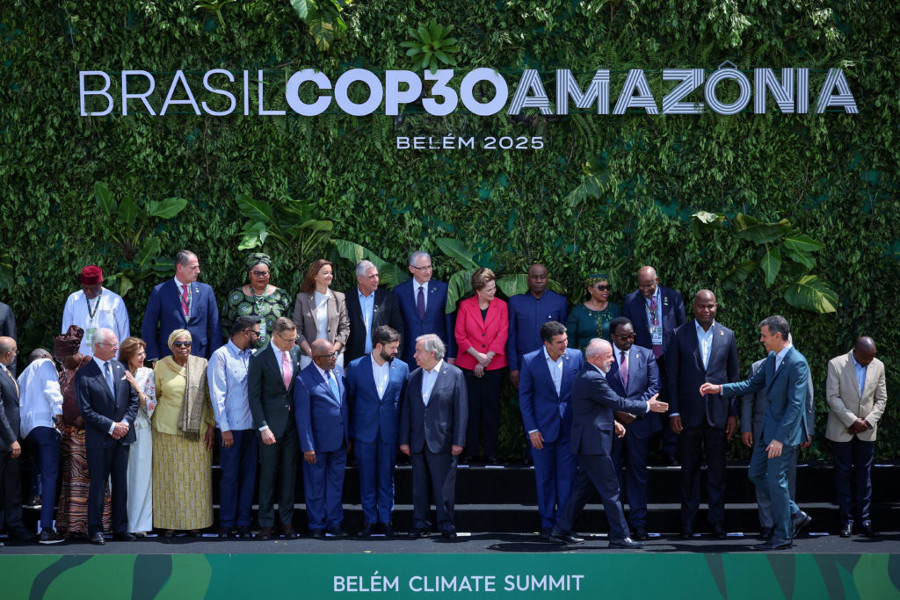
COP30 – Belém's fight for climate justice It is important to recognize that climate diplomacy is not the only sector in crisis. Trust in and faith in multilateral institutions have declined significantly in recent years. Multilateral institutions were unable to prevent the genocide in Palestine or avert the Russian invasion of Ukraine. The UN, long considered the leading multilateral institution, is under constant attack from right-wing populist politicians and faces both drastic budget cuts and a wave of bilateral agreements that undermine its authority. International commentators and analysts have recently argued that global diplomacy is increasingly shifting from cooperation to competition. However, some also point out that truly equitable cooperation may never have existed. The gap between the Global North and the Global South, rooted in centuries of colonial exploitation, remains significant, particularly regarding climate diplomacy. The Global North has never shown a willingness to prioritize justice and historical responsibility and to adhere to principles of fair appropriation of the atmosphere . Likewise, it has consistently failed to provide sufficient climate finance to countries of the Global South, in line with the principle of " common but differentiated responsibilities " enshrined in the preamble to the UN Framework Convention on Climate Change. The claim by Global North governments that public funds are scarce is clearly contradicted by the rapid increase in military spending in recent years. And while genuine cooperation on an equal footing has always been difficult to achieve, the urgency of this goal grows with the intensification of global competition. Brazil's hosting of the COP is not merely symbolic. These are the conditions under which the representatives of the participating states will arrive in Brazil next week to resume negotiations. Brazil's hosting of COP30 is not merely symbolic. It brings world leaders to the Amazon, the world's largest rainforest and a crucial stabilizer of the global climate system. It is also decisive for the course of COP30, as the Brazilian government under President Lula is positioning itself as a counterweight to the previous authoritarian and climate-denying administration and aims to lead the transition to sustainable energy production. The timing of the conference is also significant: Brazil will hold elections next year, and their outcome is still uncertain. The host country's government (referred to as the "presidency") exerts considerable influence over the COPs. It uses its diplomatic networks to shape the agenda, holds preparatory meetings with key parties, and intervenes when negotiations stall. In cases of successful negotiations, a large part of the credit is usually attributed to the presidency. Current geopolitical tensions are reflected in the official COP30 message, which this year focuses on the transition from “negotiations” to “implementation.” The presidency has repeatedly emphasized the importance of collective action , not only in the formal negotiations but also outside the negotiating rooms, where business leaders, investors, and scientists are meant to meet to find solutions to the climate crisis. The presidency has proposed Mutirão —a form of collective action inspired by Indigenous traditions and described as a “continuous mobilization method”—as a way to achieve a new form of climate policy. This marks the first time a presidency’s communication strategy has actually extended beyond formal negotiations. However well-intentioned this approach may be, it risks undermining the process, since negotiations between state actors are meant to establish global standards that others will follow. For the COP to be considered a success, the performance of the presidency is usually measured by whether the negotiations have led to concrete results. However, with regard to its most important political project, the Brazilian presidency appears to be trying to preempt the negotiations: it has already presented the Tropical Forest Forever Facility (TFFF) , which is to be launched during the World Summit of Heads of State and Government shortly before the negotiations begin next week. The facility is being promoted as an innovative financing model designed to generate investments of around US$125 billion from governments, corporations, charities, and wealthy individuals. These funds would then be invested. The returns would initially be distributed to the investors, and the remaining proceeds would be used to compensate forest owners and conservationists based on the number of hectares of standing forest. However, the fund would invest heavily in loans and bond instruments that can be vulnerable to crises such as defaults, currency devaluations, or political instability . Should the fund fail, private creditors would be bailed out first, raising the urgent question of what would then happen to the world's remaining forests and their protection. Despite these concerns, the World Bank gave its approval last week and agreed to manage the fund . Numerous governments pledged their support . Climate finance remains a crucial factor in reducing emissions. Even though the Brazilian presidency is trying to shift the focus beyond formal talks, a number of key agenda items will dominate the discussions in Belém. A central issue is each country's commitment to reducing greenhouse gas emissions in line with the 1.5-degree target, as enshrined in its Nationally Determined Contributions (NDCs). Every five years, countries must submit their NDCs, which are then summarized in a synthesis report . Current contributions, taken together, would only cover about 10 percent of the reductions needed to achieve the 1.5-degree target. Significant gaps remain because countries in the Global North do not include historical emissions and climate debt, which would obligate them to contribute a far greater share to emissions reductions. Climate finance, which supports both climate action and adaptation measures, remains a crucial factor in reducing emissions. According to the Paris Agreement, industrialized countries are supposed to provide these developing countries with funds commensurate with their historical emissions, but this commitment has never been fully implemented. Two key decisions were made at last year's climate negotiations in Baku. First, $300 billion was pledged to developing countries for climate action and adaptation – an amount criticized by representatives of the Global South and civil society as far from sufficient . Second, a broader annual investment target of $1.3 trillion was announced, though few details were provided. In both cases, it remains unclear who will actually provide the funds – a question that developing country negotiators are expected to raise forcefully at COP30. Beyond the issue of scale and sources, representatives of the Global South and activists stress that climate finance must not take the form of loans, as this would further exacerbate the already unsustainable debt burden in the Global South. They demand that funding for adaptation measures must be equivalent to that for climate action, that financing must explicitly include loss and damage – climate-related damage and losses that cannot be avoided through adaptation measures – and that access to these funds must be guaranteed to those communities most affected by the impacts of climate change. In 2022, the Loss and Damage Fund was established at the climate conference in Sharm el-Sheikh – a move hailed as a major success. However, this initiative is now in danger of stalling. Only a small amount of funding has been pledged or disbursed, despite scientists warning that trillions will be needed to adequately address the needs of the most affected communities. After three years, civil society finally has the opportunity to assemble again. While the Brazilian presidency may attempt to downplay the central importance of the formal negotiations and, in particular, to divert attention from sensitive financial issues, it could inadvertently shift the conference's focus to an area where its influence is rather limited. After three years of COPs led by authoritarian regimes, civil society will finally have the opportunity to hold its own summit outside the official session. The gathering of social movements and Indigenous communities from around the world, Cupola dos Povos , is the culmination of years of effort by Brazilian and Latin American civil society and offers a people-led alternative to what many perceive as stagnation in the negotiating halls. Indigenous movements, social justice activists, women, youth, and Black-led organizations, along with numerous other civil society groups, will present their visions for a just and sustainable transformation while addressing pressing challenges such as climate denial and the rise of the far right. Given that governments continue to lack adequate answers to the pressing problems of our time, the question arises as to how the people can regain power. On the surface, geopolitical relations may appear less favorable than in previous years. Yet COP30 presents a crucial opportunity. With climate deniers and those who oppose effective climate policies withdrawing from international climate action, negotiators can demonstrate what is possible when justice, historical responsibility, and a fair distribution of the burden set the agenda. They could mend fractured North-South relations and breathe new life into multilateral institutions. Rarely before has the world needed them as urgently as it does today. https://www.rosalux.de/news/id/53972/cop30-belems-kampf-fuer-klimagerechtigkeit? Back |
 |
||||||
|
|||||||