|
|
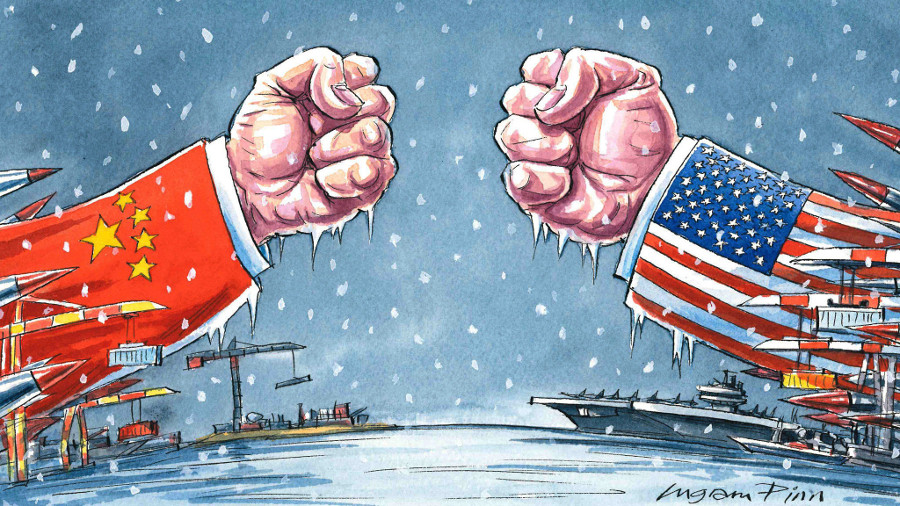
Whose democracy will be protected: a cross-strait war or a class war? We agree that bourgeois governments may deliberately omit some information and amplify others for reasons such as inciting nationalism and protecting their own interests, just as communism is deeply misunderstood in Taiwan. However, "only unification is an option" does not mean the right to self-determination. In the eyes of the Chinese Communist Party government, the Taiwan issue only has two options: "peaceful unification" and "unification by force." This does not respect the Taiwanese people's right to decide their own future, and coercion and violence do not constitute self-determination. Spark-Taiwan Revolutionary Communist Party must point out that the self-determination of the Taiwanese proletariat must not be influenced by any external threats or coercion. This conflict will be between two capitalist forces, costing the lives and blood of workers on both sides. Therefore, the interests of the proletariat on both sides of the Taiwan Strait are aligned, and the best way to resolve the threat of war between the two sides is to join hands with the Chinese proletariat to complete their respective revolutions. When the revolution in Taiwan succeeds, it will also do its best to promote the victory of the revolution in China. Only after capitalism is overthrown on both sides of the Taiwan Strait can the two sides truly move towards peace and jointly promote the success of the revolution in Asia and even the world. Second, whose interests does Lai Ching-te increase the defense budget for? Lai Ching-te recently convened a high-level national security meeting on the "National Security Action Plan for Safeguarding Democratic Taiwan," which was held shortly after the controversy surrounding Sanae Kaohsiung's "Taiwan Contingency Theory," sparking debate from various quarters. At the press conference following the meeting, Lai Ching-te mentioned that China "aims to complete preparations for the military unification of Taiwan by 2027" [Note 2], and based on this, advocated for increasing the defense budget. Lai Ching-te's remarks were not merely his personal will, nor were they a spur-of-the-moment decision. Behind them lay, in fact, the intervention of American imperialism in Asia and the Japanese government's subservience to American interests. The Republic of China government was constrained and manipulated by the imperialist powers of the United States and Japan. These actions, in addition to maintaining the political careers of Taiwanese bourgeois politicians, also made the Republic of China a pawn for the United States to limit the challenges of Chinese imperialism. In the end, it was the Taiwanese people who were sacrificed to satisfy the imperialist ambitions and the political interests of these politicians. In March of this year, Lai Ching-te made proposals such as "restoring military trials," which not only disrespect legal norms but also cause a regression in democratic rights [Note 3]. This was not accidental, but rather because the conflict between China and the United States is becoming increasingly intense. As a pawn to contain China, the reactionary governments of Japan and Taiwan will naturally use a hardline stance against China to ensure their regional interests and win public support to consolidate their rule. Therefore, in understanding Lai Ching-te's role, we cannot simply regard him as a politician who does whatever he wants; the problem lies with the entire reactionary Republic of China government. Looking at Lai Ching-te's entire speech, in addition to China's military preparations for unifying Taiwan by force, Lai repeatedly mentioned the content related to social control. He said, "We should jointly establish the 'One Country, Two Systems Taiwan Plan' as an inviolable red line for Taiwanese society through government policy declarations, legislative resolutions, and the collective actions of political parties and civil society groups. On this basis, we should establish institutional norms for exchanges and political dialogues between domestic political parties, legal entities, civil society groups, etc., and China." This is in fact the government conducting pre-screening of political speech. We can anticipate that if the Lai administration's policies truly lead Taiwan into a quasi-war state, then Taiwan's democratic rights will be significantly restricted. Without effective mass struggle, we cannot expect the government to kindly relinquish these rights. Therefore, we must remind everyone that the threat to "democracy" comes not only from outside but also from within. In a press release from the Presidential Office, Lai Ching-te pointed out that the defense budget will be increased to 5% by 2033, which will inevitably squeeze the budget for people's livelihood. Given the already heavy pressure on people's livelihood in Taiwan, this may further impact the living standards of the working class and exacerbate the severe labor rights situation that has arisen since the tariff controversy this year. In addition, from a legal perspective, according to Article 83 of the Budget Act, the Executive Yuan may submit a special budget in the event of national emergency facilities, war, major economic changes, major disasters, or major political events that occur irregularly or every few years (items 1 to 4 of Article 83). The fact that this defense budget has been added by another 1.25 trillion seems to raise questions about the applicability of the law. III. In wars between bourgeois states, who suffers and who benefits? This leads us to explore the so-called "protection of democracy" that many politicians often tout. But who is actually enjoying this democracy? On the surface, it seems that every person in Taiwan has the right to vote, and everyone can have a place in the democratic system. In reality, this democratic system only serves the bourgeoisie. They use election deposits or other institutional restrictions to make it difficult for ordinary proletarians to truly participate in policy-making and decision-making. In the end, we can only choose one person from among many bourgeois politicians to "represent" the people. And these politicians, faced with the financial backers and exchanges of interests behind them, will first abandon the rights and interests of the people. This is the dictatorship of the bourgeoisie; this "democratic system" does not belong to the people, but to the bourgeoisie. Wars between bourgeois states are nothing more than the sacrifice of people's blood and lives to achieve the political goals of politicians. We can see that although the bourgeoisie of the two opposing camps are constantly inciting conflict between the people, they can cooperate with each other to make money without any scruples. Even DPP politicians and Chinese businessmen who seem to be at odds can cooperate to make money, no matter how hateful they describe the other side. But if war breaks out between the two sides of the Taiwan Strait today, these politicians will not have to fight and sacrifice themselves; it will be ordinary people who will sacrifice themselves. Under the capitalist framework, Taiwanese capitalists will absolutely not be forces that insist on protecting the country. Regardless of whether they are blue or green, they will be eager to open the country's doors and surrender, just as they did in the past when Japan or the Kuomintang attacked. By cooperating with the Chinese bourgeoisie, they will continue to seize wealth in Taiwan. Historically, we can boldly predict that the original Taiwanese capitalists will cooperate with the CCP party-state and become powerful assistants in "rebuilding Taiwan". Regardless of the outcome of the war, it is the people on both sides of the Taiwan Strait who will make sacrifices, and the bourgeoisie on both sides will not lose their ruling position. They can still stand from the perspective of the oppressor and obtain political and economic benefits. Taiwanese politicians often say "Taiwanese people must unite," as if our proletarian interests are the same as theirs. In reality, it's the opposite. Those who share the same interests are the Chinese politicians who call us their enemies, while those who share the same interests as ordinary Taiwanese people are actually ordinary Chinese people. Our enemy is not the Chinese, and the Chinese are not the Taiwanese. The common enemy of ordinary people on both sides of the strait is actually our respective ruling classes. IV. The Stance of Revolutionary Communists 1. Opposing the escalating tensions between the ruling classes of China, the US, Japan, and Taiwan. The current escalation of tensions in East Asia is primarily due to the ulterior motives of the ruling classes in the US, China, Japan, and Taiwan. The US ruling class is supported by its military-industrial complex; the Takashi government in Japan is using a hardline stance against China to bolster its approval ratings; the Xi Jinping government in China is diverting attention from class contradictions through military preparations against Taiwan; and the Lai administration in Taiwan is using the perceived threat from China to consolidate its rule and deflect discontent over livelihood issues. In short, the escalating tensions in East Asia will only strengthen the crumbling rule of the bourgeoisie and will bring no benefit to the working class. 2. International working-class solidarity To break this situation, besides vehemently opposing their respective ruling classes, the working class must also forge international solidarity and fight together. Internationalism means not merely paying attention to and expressing concern for the affairs of other countries, but also understanding how the ruling class of one's own country harms the proletariat of other countries. The proletariat of all countries must clearly realize that wars between imperialist powers often result in workers from different countries killing each other to create capitalists. 3. Drive out imperialism and take control of our own future. Returning to Taiwan itself, as a bourgeois nation mired in paradoxes and contradictions, Taiwan has always been trapped in a political system controlled by imperialism. Taiwanese laborers have never been allowed to control their own destiny, always remaining in a state of manipulation. Only when laborers organize themselves into a political force, rise up to determine their own future, and liberate themselves, can true self-determination be achieved. Without such self-determination, labor democracy in East Asia is unthinkable. https://marxist.tw/2025-11-29-tw-rci/ Back |
 |
||||||
|
|||||||