|
|
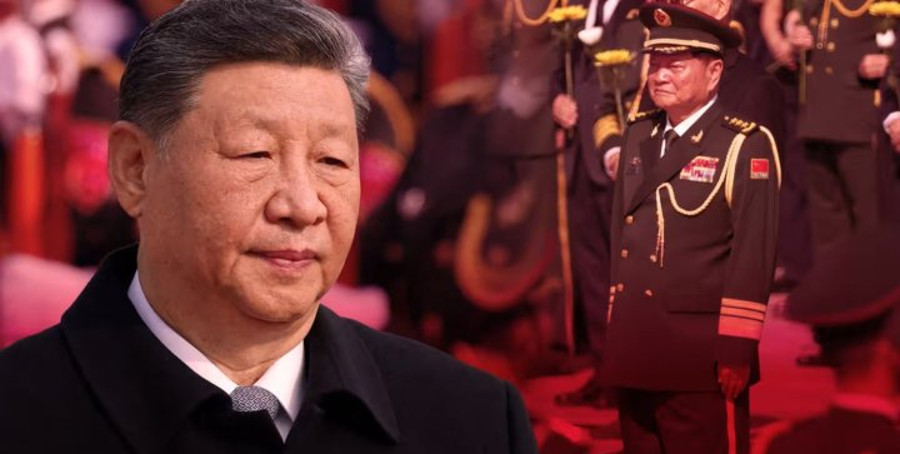
China. Zhang Youxia and the serious crisis in the Chinese military apparatus. This is because the message sent by Xi Jinping, a Richard III in Beijing, is that no one but himself is indispensable to the project of the "great rejuvenation of the Chinese nation." Furthermore, it demonstrates that he presides over a government marked by the systematic elimination of potential rivals, often including those who were originally his allies or close supporters. As sinologist Jonathan Czin describes it , we are witnessing a generational shift in the armed forces. “An entire generation of the military has been virtually decapitated. This suggests that Xi was fed up with the leadership generation for some reason, possibly for different reasons for each person. But at some point, he clearly decided: ‘I don’t like this generation and I need to get rid of them all.’” Xi hopes to reach the centenary of the People's Liberation Army (PLA) and the 21st CPC Congress, both to be held in 2027, with an even more disciplined cabinet than the one he achieved in 2022. But he appears to be heading towards these national events as a Bonapartist government beset by internal uncertainties and distrust of the state bureaucracy. Internal factions At first glance, this measure fits Xi Jinping's administrative pattern: using anti-corruption purges to supposedly increase efficiency and resource utilization and improve the Party's "public morale," while promoting his own undisputed authority within the regime and concentrating the directives of power in himself. But the caliber of the purged general, and the speed of the proceedings, are particularly striking. Zhang Youxia was deputy vice chairman of the Central Military Commission, the governing body of the Chinese People's Liberation Army, the organization that effectively controls the armed forces, headed by Xi himself (and by all the general secretaries since 1949, such as Mao Zedong and Deng Xiaoping). According to Xi, within the military command, Zhang had long been considered the Chinese president's closest military ally. Moreover, his parents, Zhang Zongxun and Xi Zhongxun, had worked closely together in the PLA's Northwest Field Army in 1947, during the Civil War. His dismissal overshadowed the departure of Liu Zhenli, another senior member of the Central Military Commission, who headed the Joint Chiefs of Staff Department. In total, of the six members of the CMC (besides Xi), five have been removed in some way, either as part of the ongoing investigation or through completed proceedings. He Weidong, former vice chairman of the CMC, and Miao Hua, the CMC's director of political work, had already fallen in 2025. They were preceded by the downfall of Li Shangfu, the former defense minister purged in 2023. The Central Military Commission—once again China's most important political-military body—now has only two members: Xi Jinping and Zhang Shengmin, who, ironically, heads the Commission for Discipline Inspection, the main internal investigator of all these anti-corruption campaigns. In other words, this is not a routine administrative measure. Analysts like Denis Wilder of Georgetown University argue that many of the recent orchestrated expulsions in the armed forces were motivated by a rivalry between a faction led by General Zhang Youxia and another group that was forged primarily through service in eastern China (provinces such as Zhejiang and Fujian), some of them while Xi was a civil servant in the region. Zhang Youxia's faction, which included several "red princes" (sons of prominent CCP revolutionaries), prevailed. This would have given him unprecedented authority. But it also made him a potential threat to Xi Jinping. "He is a stubborn, rude old man, and although he allied himself with Xi, he was never his subordinate," Wilder told The Economist . While the anti-corruption campaign is a hallmark of the Xi Jinping era, which aimed to expand and concentrate the powers of the General Secretary while reorienting and improving China's technological and military capabilities, it is unlikely to have eliminated the existence of such factions. Historically, the CCP has been plagued by internal struggles between various factions, many of which have led to social unrest and class struggle. Mao Zedong engaged in emblematic clashes with central party figures such as Liu Shaoqi and Lin Biao in the 1960s and 1970s, and events like the Cultural Revolution permeated these disputes (as well as giving rise to other factions). Even after Deng Xiaoping's reforms between the 1980s and 2000s, the Shanghai Faction (linked to Jiang Zemin, representing the economic interests of the eastern provinces) and the Tuanpai Faction (Communist Youth League, linked to Hu Jintao) competed for niches within the state apparatus and divided those niches among themselves. Xi Jinping sought to eliminate such divisions in order to consolidate power. In many ways, he succeeded in this endeavor, but the scale and scope of the purges may have fueled old resentments and new internal realignments within the bureaucracy. Such events could foreshadow unpredictable social unrest. Military preparedness as an unknown quantity. In any case, the recent reorganization of the military high command leaves the country without one of its only generals with war experience: Zhang Youxia, along with Liu Zhenli, is a veteran of the 1979 Sino-Vietnamese War. Without the operational vice president of the CMC, it is unclear how the chain of command will now function. This could be a significant setback for Xi Jinping's government, which in recent years has portrayed its growing military readiness for actual combat and its alignment with the most advanced theory of coordination and command of the various forces as central aspects of its rise as a power. The investigation and dismissal of Zhang Youxia (who had a multitude of loyal figures, having been in the armed forces since the 1980s), the purge of He Weidong (a longtime political ally of Xi, with whom he served in Fujian province in the 1980s, seen as a rival to Zhang), and Miao Hua (another acolyte of the Chinese president) leave few opportunities for experienced military personnel in prominent political positions. It also hinders coordination among the various branches of the military, which are invested in achieving the capability to combine air, land, sea, cyber, and space operations. The morale-boosting effect on the troops will likely be significant. The purge of army leaders implies the continued persecution of soldiers loyal to these generals. The history of such purges under bureaucratic governments of Stalinist tradition or origin is revealing, despite their structural differences. Stalin's purges in the Red Army transformed it into a tottering giant, as evidenced by its poor performance during the Winter War of 1939 and Operation Barbarossa of 1941. In 1978, Pol Pot's purge of military commanders led to the rapid collapse of the Khmer Rouge's defenses in the Vietnam War. This will undoubtedly affect the scale and pace of China's military preparations for large-scale operations, especially in a scenario as complex as an intervention in Taiwan. The implosion of the High Command within the Central Military Commission exacerbates the weaknesses of an army lacking officers and generals with practical combat experience. If Xi Jinping was already dissatisfied with the shortcomings of the armed forces, his decision to eliminate potential rivals at the cost of aggravating many other problems only worsens the situation. Which generals are involved in the "Taiwan mission"? According to Tristan Tang, in an article for Jamestown , a comparison between the PLA Daily editorials published the day after the announcement of the purge of former CMC Vice Chairman He Weidong and those published later regarding Zhang Youxia and Liu Zhenli reveals political differences that could shed light on the motive for the purge. Among these differences were disagreements over Taiwan. In contrast to the downfall of He Weidong, when official statements described him as someone who “abandoned his original mission, lost sight of the party’s principles, suffered a collapse of faith, and betrayed loyalty,” this was not the language applied to Zhang. The general is accused of violating authority. According to the author, “ While both cases cited damage to the PLA’s ‘political ecology,’ Zhang was described as causing ‘serious damage to the political consciousness of the armed forces.’ This formulation suggests that Zhang did not prioritize political loyalty as a guiding principle of military building .” Furthermore, the authorities “ accused He Weidong and others of ‘seriously damaging’ the system, while they accused Zhang and Liu of ‘seriously trampling on’ it. The former implies obstruction that diluted Xi’s orders, while the latter implies outright defiance or disrespect .” Similarly, the official text stated that He Weidong had severely damaged the image of senior officials, while Zhang Youxia had severely damaged the image and authority of the CMC leadership. This distinction suggests that Zhang and Liu's disagreements with Xi reached a visible and widely acknowledged level within the PLA . Among the military indicators, the article suggests that Zhang and Liu lost power because their results in force development and war preparedness fell short of expectations and may have "compromised Xi Jinping's requirement that the PLA be capable of invading Taiwan by 2027." The official statement explicitly accused Zhang and Liu of causing "serious damage to combat capability development," an accusation absent in the case of He Weidong. This distinction would indicate that The CCP leadership considered that Zhang and Liu's actions had a direct negative impact on the PLA's military capabilities. He Weidong and others "caused serious damage to national defense building" (给...国防...造成极大损害), while Zhang Youxia and Liu Zhenli "caused serious damage to the state" (对...国家...造成极为恶劣影响). The references to the "state" point to broader national development. In military terms, this concept focuses on resisting external threats or, in the specific context of the People's Republic of China, achieving unification with Taiwan. Many of these factors could be among the reasons for the purge, although there is insufficient evidence to determine the procedural differences in the punishment for each member of the Central Military Commission. Xi Jinping's core military policy is combat readiness and preparedness, with an expansive and assertive military development approach. Zhang appears to have favored longer timeframes and downplayed the importance of immediate combat readiness. This is an important aspect of the challenge to authority, even if it was not done with the conscious intention of thwarting the government's objectives. Xi's problems with his American rival. However, there are other calculations at play, besides what some call Beijing's "new approach" to reuniting with Taiwan. On the one hand, after a long period of purges in the upper echelons of the military, China resumed high-precision military exercises in the Taiwan Strait in response to the announcement that the Trump administration had approved an $11 billion arms sale to the island. The government wanted to demonstrate that, regardless of the military restructuring crisis, the path toward the reconquest of Taiwan remains open. On the other hand, Xi Jinping seems to understand that, in general, Trump is not particularly interested in provoking Taiwan. The harsh statements by Japanese Prime Minister Sanae Takaishi regarding Japan's imperialistic decision to consider a possible Chinese intervention in Taiwan as a "matter of national survival" did not garner Trump's support. In fact, the US government attempted to discipline Japan into moderating its rhetoric, a humiliation for Tokyo, which did not even receive a statement of support in the face of China's threats. Furthermore, as Jonathan Czin points out , Trump's National Security Strategy doesn't even mention Taiwan and instead focuses aggressively on the goal of dominating the Western Hemisphere, an objective that Taipei does not share. The political situation in Taiwan also appears to favor China. "President Lai Ching-te, whom China detests, is facing political difficulties at home after the failed impeachment campaign this summer. There will be elections in 2028, and the new leadership of the opposition party (Kuomintang) is making very favorable comments about Beijing. From Beijing's perspective, they have room to maneuver, and 2028 is likely the next major turning point where they see a real opportunity to shape and change the dynamics," Czin states. In other words, Zhang Youxia's expulsion might not reflect a particularly hostile attitude toward Taiwan, but rather the central government's decision to adopt a stance that combines accelerated military preparations with political dialogue more palatable to the Taiwanese population. This does not alter the CCP bureaucracy's obsession with reclaiming Taiwan by any means, including force; however, the administration seems to want to dilute the exclusively military narrative with displays of soft power, such as Taiwan Restoration Day, a joint celebration that commemorated the 80th anniversary of the Japanese surrender on the island in October 2025. Wang Huning, a member of the Politburo Standing Committee, spoke on that occasion about the economic, energy, cultural, and social benefits that reunification would bring to the entire population of the island. As Yang Kai-huang, a professor at Ming Chuan University, states, “ Beijing is taking a two-pronged approach: shaping public opinion (addressing the concerns of the Taiwanese people, highlighting the benefits of reunification for ordinary people, and expanding the judicial reach on pro-independence figures), while simultaneously using a military posture to deter the United States and Japan .” The impact of Zhang's dismissal on the PLA's ability to invade Taiwan may not have worried Xi Jinping. The general's focus on war preparedness likely did not align with his objectives. However, it is unclear whether he has other officers who will accept his directives within an increasingly strained inner circle, divided by disputes and mutual fears. Therefore, nothing indicates that Xi Jinping is any closer to his goal. Moreover, the crisis within China's military apparatus coincides with a complex economic situation, as the economy continues to slow, reaching its lowest levels in 40 years, although still significant given the global economic downturn. Decades of unbalanced growth have generated enormous structural excess capacity, implying deflationary tendencies—a manifestation of a persistent crisis of overproduction. The unemployment rate among urban youth is high, reaching 16.5% in December 2025 among the 16-24 age group. With the decline in jobs, particularly in construction and manufacturing, the flow of migrants to cities tends to decrease, leading to a reduction in the available workforce. China's Ministry of Rural Affairs issued a warning in December, stating that the government must "avoid a large-scale problem" of migrants "remaining" in their home villages. China also faces a demographic crisis of considerable proportions. The Chinese population has been declining for years, reflecting the rising cost of living, increasing unemployment, and anxieties about the future, which led the Communist Party to implement a (highly unpopular) pension reform in 2024. The iron-fisted discipline of workers by a reactionary bureaucracy is likely to increase and generate further shocks. These problems are difficult to address given the prospect of factional disputes within the state. Undoubtedly, the Beijing bureaucracy sees the internal political crisis of Trump's imperialism—the weakness of the US economy, the decline in presidential popularity, public outrage against Immigration and Customs Enforcement (ICE) and its proto-fascist methods of persecuting immigrants, etc.—as an opportunity to experiment. But Xi Jinping appears less well-suited for such initiatives of historical magnitude, with a state apparatus more deeply mired in internal distrust. https://www.laizquierdadiario.com/Zhang-Youxia-y-la-grave-crisis-en-el-aparato-militar-chino? Back |
 |
||||||
|
|||||||