|
|
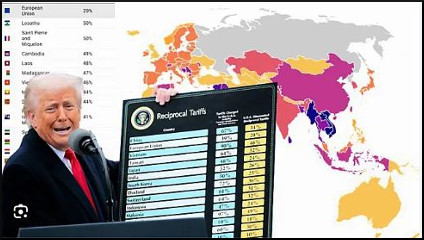
US Signs One-Year Extension of AGOA Patrick: Well, it’s extremely significant for several of them, where the announcement of the end of AGOA - or precisely, it was on April 2nd, the so-called liberation day last year, the announcement of major new tariffs. For example, 50% on Lesotho. And it’s worth maybe going back just to remind ourselves. So, Lesotho’s exports to the United States were basically blue jeans: Wranglers and Levis. And once the 50% tariffs were put on, although after a few days, everything was cut back a bit. But what the effect was, to massively reduce the output of clothing from Lesotho. For Angola, it hasn’t had such a big effect because while Angola had 0% tariffs because of oil being the main export to the US, the 0% tariff on oil and indeed on many of our raw materials - like platinum and gold - that’s continued. So Trump’s been very erratic in the application. And then what he did with the original April 2nd 2025 tariffs that just put everything into chaos - the stock markets were crashing and he was forced to revisit that. But what it did was to reflect the trade surpluses that countries had. So Lesotho had quite a big trade surplus, and many African countries do. We export a great deal of raw materials. They’re processed in the US production systems, but in fact, to a large extent, our trade deficits in the continent are with China. Because that’s where the most immediate source of our imports, manufactured goods, come from. South Africa being a good example, and where we’re losing dramatically in steel and tires and nuts and bolts and washing machines. Those were the subject of punitive tariffs by South Africa against China last year because of that flow. So the world trade system’s in havoc. And the threat of this - what we would call it, ‘dumping’, that’s a technical term for selling below the cost of production, which many Chinese companies do because they’re so excess in their productive output. And that’s meant that when China – let me say the secondary effect of Trump’s tariffs – when China couldn’t get 20% of its exports to the US in, because of the new tariffs going up to 47% there, well, they redirected, they displaced, those exports. South Africa was one of the victims of that, and we’ve lost big chunks of our steel industry and other industries. Even yesterday, they were announcing that imports had flooded our carton-paper packaging industry. And that’s now closed down its main plant here. So, we’re in a situation, I think, where Trump is creating havoc, that’s spreading all around the world. And I don’t think this minor concession, which is a renewal - just until December - of AGOA, given his tendency, as we said with Modi, with with Lula in Brazil, a 50% tariff to punish Lula for having prosecuted his predecessor, for the coup attempt in 2023 - those reflect that Trump wants to play politics. SAfm: What must we infer? What do we read about this short extension - a year but I mean I guess it’s just it’s 11 and a bit months now, just 11 months actually, such a short term, is it that he’s waiting to see how his strategy works, before deciding again? How do we read into it? Patrick: Well, I happened to be in Washington at the end of last week and discussions there I had suggested that there are probably major importers of goods from Africa who’d gotten used to the ‘no tariff’ deal, and they kept it going. There’s also potentially votes in the United Nations, where Trump is beginning to not just treat African countries as ‘ess-hole’ countries and dismiss them, but actually have to worry about whether the UN would have this large number of votes, 54 votes from Africa. That’s always a factor, and helped motivate the original AGOA, back, 26 years ago. So I think it’s a combination, and the fact that it isn’t really that big a chunk of the US import market. And there is still a degree of concern in the US about importing inflation. The prices are still at a level much higher - at least 3% higher - than they were when Trump took office just over a year ago. And of course his big platform was to lower prices. So, if you lower tariffs on goods from Africa, you get a small benefit. We’ve already seen, as I said, with energy at 0% tariff, and our major exports to the US, in the form of the raw minerals and the smelted metals: those being kept at 0%. That hasn’t really been a factor now in the renewal of AGOA. I think, what will be a factor is that automobiles which were really down and out, seeing some of the Eastern Cape factories maybe consider selling to China, for them to take over those factories. Or we’ve seen Mercedes with a dramatic decline. They at one point issued figures saying was an 82% fall in the first half of 2025 in South African auto experts exports to the U.S. That’s an extraordinary hit. And so it meant huge downsizing at our main Mercedes and some of the other factories that were sending cars. Now that was even before August when there was a 30% tariff imposed, and even before April 2nd. That was back in February when our steel and aluminium plus the cars were hit with 25%: just the first action of Trump in February 2025. So we saw, already, the impact. We haven’t had the latest figures. But I would say that plus our wines, our grapes, those are the two vineyard products that have also had the 30% exports since August. The citrus tariff they put on, but then they took it off in November. So now the interesting thing, who gets hurt? Afrikaner farmers for one. I mean, that’s the irony, isn’t it, that welcoming a few hundred in as refugees, it may ultimately be a few thousand. But it’s been a slow and tokenistic process of saving the offer Afrikaner from ‘genocide,’ right, that ridiculous meme. But he has had a few refugees, but actually when you look at the real impact, I think the data might show when it comes out in the coming days and weeks, that 2025 was a bad year for wine and grape exports mostly. So we lost a lot of the steel market and aluminium. We’re also losing some of that now to Europe because of the new carbon tariffs, right? The taxes on the very very high CO2 impact of coal that goes into the energy, that goes into the products that go to Europe. And next year it will be the UK. So we’re seeing a lot of tariffs and some are good, I think in the sense they are addressing climate crisis. Some are just this whimsical politics. SAfm: And briefly if you could just say, with every challenge comes an opportunity to reset. And we saw this with Russia, Ukraine, Europe started to think about where else they could get their gas. Is this an opportunity to accelerate the African continental free trade area and get into Africa trade going so that less dependence on the goodwill of things like AGOA? Patrick: It should be, Peter, because the African Continental Free Trade Area has been a real failure. It’s now over five years and it has done really nothing to increase the ratio of intra-African trade. It’s still around 15% of total trade. So we’re still in that treadmill of exporting raw materials and importing from, especially, from China, manufactured products. The big step would probably be the African Export Import Bank signing on, which has just happened this week. And I think the main thing is that South Africa has not been playing the kind of aggressive role I’d expected, with South African companies exporting to the continent. And you know I think the simple reason for that is many of the African countries are in a debt trap and they’re paying whatever forex they have - they got a big cut in their USAID and some of the other European aid, which cut down their forex. Commodity prices crashed except for gold and platinum, and that cut their forex. And paying the debt with still very high interest rates, that takes the forex. And so that means to buy South African goods? Not much money. SABC: Professor Patrick Bond, great talking to you. Thank you so much indeed for your thoughts and analysis. Patrick: Thanks very much Peter. SABC: That’s professor Patrick Bond, a political economist and distinguished professor of sociology at the University of Johannesburg, unpacking this extension of AGOA for just a year. But one gets a sense that we need to be a little suspicious. https://www.youtube.com/watch?v=jwz25K-Qkec Back |
 VIDEOS
|
||||||
|
|||||||