|
|
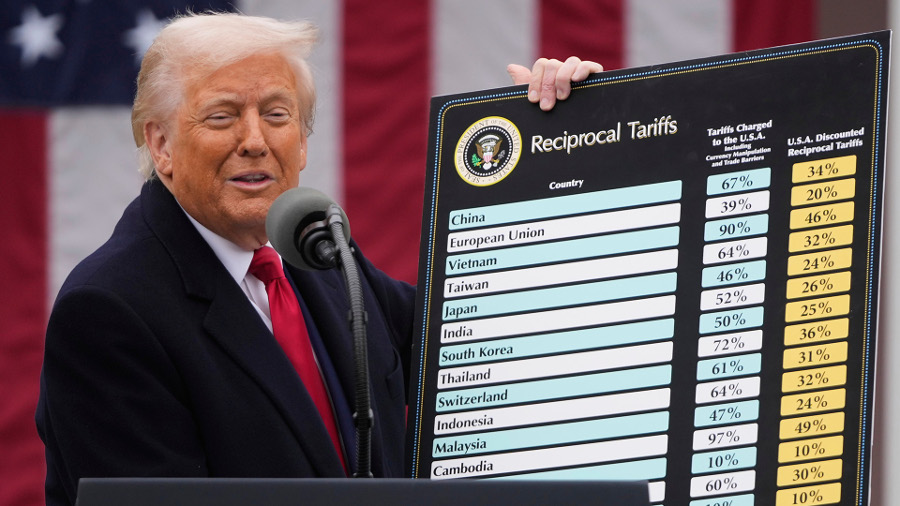
Court Tariff Ruling: Donald Trump might try to shake things up Patrick: Yeah, Trump’s personal crisis now – in terms of his power in relation to his courts – is also going to create more chaos in the world economy because reacting to all of this, is going to be tricky since the Supreme Court hasn’t really made all the clarifications about who wins and who loses. So that’s still in the days ahead. SABC: So we can’t actually say right now or could you say how significant the ruling is? Patrick: It’s profound. It’s the worst that Donald Trump has suffered. And it signals, for John Roberts, the conservative head of the court, maybe ‘treason’ in Trump’s mind. You could hear Trump say, ‘it’s a disgrace.’ And two other conservatives who are more free market, so they don’t like tariffs, plus the three who are traditionally more working-class, liberal oriented, and that gives six. But normally it’s the other way around. Normally six conservatives and those three liberals. And so what we’re seeing is maybe some kind of shift, that could also affect immigration where John Roberts has also been against Trump, and some of the other huge concerns, as Trump tries to make a mess with the constitution, maybe change voting systems and even, he’s threatened to, change his own two-term limit rule and try to get a longer term. SABC: What are the implications for South Africa at this point? Patrick: We lost so much - about 40% - of the trade between South Africa exporting to the US since 2024. It evaporated mostly in cars. I think we had about 26,000 cars exported to the US in 2024, and down to about 6,000 in 2025. So that’s the biggest loss, but also steel and aluminium. They were facing some of the worst tariffs. And then when Trump went after Afrikaner farmers - it’s ironic, he said ‘they’re victims of genocide’ – but on the vineyards, the grapes and the wine, and initially the citrus and the macadamia nuts: those also took about a 3% decline in agricultural output. So the trade deficit that the US has with South Africa – since we pushed so much, and the most important weren’t affected: platinum and gold along, with some iron ore. Some of the basic minerals aren’t affected by these tariffs. But what we saw was the rise in price in platinum in October, November, December, and gold just soaring throughout the year, which means even if they didn’t take much more in quantity, the amount in value went up. So, we’ve kept that trade surplus. That’s what Trump hates. You heard him say just a few minutes ago, that he feels any country that runs a trade surplus with the US is ripping off the US – which basically is nonsensical economics. SABC: Quite a relief, AGOA has been renewed for, until the end of the year. Patrick: Yes. Although the hatred that Trump has for South Africa still makes his wielding of any kind of weapon – including tariffs – difficult to predict. It is true that we would ordinarily go down to a zero tariff for cars, steel and aluminium and horticulture and vineyard products, agriculture. But I fear that this is still very much up in the air. What Trump threatened to do now, is find other routes. So two of them would be to use his own tariff policies where he could say, ‘this is genuinely unfair trade, where you can see pricing under the cost of production or ‘dumping.’ And the second, is, he’d go back to Congress. He still has a very slight majority. He might win the same kinds of tariff policies that he has been imposing. But you see what’s so tricky about him, is that he uses that tariff as a weapon, day by day, and you never know what’s going to happen. It’s not something you can legislate. Just for example, he didn’t like India buying oil and gas from Russia, so he put on a 50% tariff. He didn’t like Brazil’s former president being prosecuted for a coup attempt, so he put on a 50% tariff on Brazil. He was up and down with China, And these are the sorts of chaos and whims. SABC: Very interesting. Those are all BRICS countries. Patrick: Well, and indeed, and South Africa obviously and Russia. The next part of this is the attempt to bring BRICS into his Board of Peace, which was on Thursday, and they have said, ‘no, we’re not sure we’re going to join,’ although Egypt did and Indonesia did. And we may see a little bit more breakage within the BRICS on geopolitics, but yes of course what Trump is doing now with the most important BRICS in his sights, Iran, and he’s threatening to go and bomb the smithereens out of Iran. Will the other BRICS defend? Will they start to, for example last September, as was threatened by President Lula of Brazil, actually come together on tariffs against Trump. And unfortunately they didn’t, and we saw that just two weeks ago when Narendra Modi – the Indian prime minister – said, “I want an 18% tariff and I won’t buy any more oil and gas from Russia.” So it’s not a very solid formation. But you know, when we also put tariffs on Brazilian sugar this week, Indian sugar, Chinese clothing, tires and steel. There’s a big demand to put tariffs on Chinese and Indian automobiles. In a way, this tariff war shows that the configurations such as BRICS don’t really mean much. We’RE talking about really terrible one-on-one internecine competition. SABC: Can we touch just briefly – and I know it’s it’s not directly related to this, but you were talking about Brazil and sugar – and we put taxes up tariffs for Brazil’s imports. Patrick: Yes, we used to have only I think, about R400 million worth of imports of Brazilian and Indian sugar. Those are the two big ones. And now I think it went up to R1.8 billion. So it’s really smashed TongaatHulet. SABC: Yes, I was going to link it to that. Patrick: Yeah, they they’re really suffering in KwaZulu-Natal, because if they don’t have demand for sugar because they’re being undercut by these cheap imports, well then the sugar mills go down, and that’s part of our de-industrialization. You think of how much of our steel industry’s gone down? Probably about 2/3 over the past 15 years. The cars – we may get some new Chinese production in – but vast cuts in our auto production. It’s really the reason why we haven’t had load shedding: some of these big smelters of metals, the automobiles, they’re down so much that we aren’t really suffering electricity shortages as a result. So, sort of a silver lining. If the electricity could be distributed somewhere else, that was more labour-intensive, that met the needs of ordinary people. SABC: Sure. Just in closing, would you say, as you said at the beginning of the conversation, I just want to get a clear understanding of that. That’s a kind of wait and see situation now, to see how Trump is going to react in the coming days. Patrick: That’s right. And we’ve been wait-and-see on the most important relationship between South Africa and the US on trade, since last May, and we’ve had Parks Tau – our trade minister – and the investment adviser Alistair Ruiters trying their best to go, again and again, raising expectations, producing nothing. And that is, I think, the problem with the US. It’s utterly unpredictable. We really shouldn’t be so dependent upon that economy. SABC: Thank you so much for coming in this evening. Professor Patrick Bond, political economist, chatting to us this evening on that US announcement today. https://www.youtube.com/watch?v=fA1RSdgI96A Back |
 |
||||||
|
|||||||