Tau backs down on China import checks
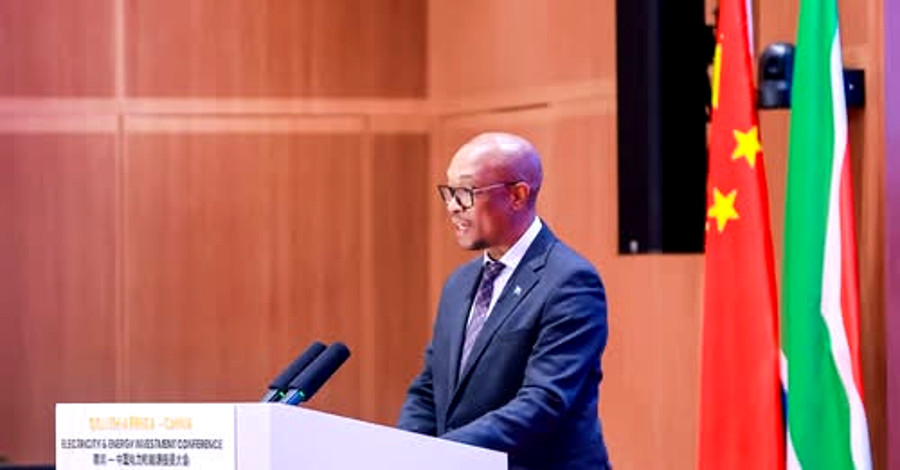
Trade minister withdraws pre-export inspection regime days before it was due to take effect
Kabelo Khumalo (Business Day) 26 September 2026
Minister of trade, industry and competition Parks Tau has, in a stunning turn of events, backtracked from his plan to tighten quality checks on unregulated imports from China that could potentially be harmful to consumers, following pushback from the country’s largest trading partner.In what was seen as a bold move to level the trade playing field and shield consumers, Tau in March issued a directive for the implementation of a pre-export verification of conformity (PVoC) regime to prevent the influx of substandard or non-compliant products into the South African market.
China was picked as the trade partner to pilot this new regime because the Asian economic powerhouse is South Africa’s primary source of imports, with the programme targeting high-risk unregulated consumer products such as skin-lightening creams, hair relaxers, facial creams, moisturisers and makeup products.The directive also covered products such as toys, furniture, generators and heating appliances, which would have had to pass South Africa’s national standards before being shipped to the country.
However, Tau this week withdrew the directive — a week before it was supposed to come into effect — giving breathing room to Chinese manufacturers and importers. The withdrawal comes three months after Tau suspended implementation of the programme following a World Trade Organisation (WTO) technical barriers to trade (TBT) intervention over a Chinese complaint about its country-specific scope.The WTO’s TBT rules were put in place to ensure that requirements such as safety labels and environmental laws are not disguised, discriminatory or unnecessarily strict obstacles to international trade.
At the time, Tau’s spokesperson, Kaamil Alli, said the implementation of the PVoC was discussed during an official trip to China in June by Deputy President Paul Mashatile and trade, industry & competition deputy minister Zuko Godlimpi.“We have agreed to continue with our discussions on the matter that will ultimately lead to a solution for both states,” Alli told Business Times.The department and Alli did not respond to requests for comment on the reasons behind the withdrawal of the directive and whether it will be reissued or if this marks the end of the programme.In its economic and trade implications report, which accompanies the directive, the department said the programme carries significant economic and trade implications, both domestically and internationally. “For South Africa, the programme is expected to yield substantial benefits by protecting its local industries from the influx of cheap, substandard imports that often undercut compliant local manufacturers.
By ensuring a level playing field, the PVoC fosters fair competition and encourages investment in quality production within the country,” the assessment stated. “Rather than testing goods upon arrival — which leads to port congestion and the risk of non-compliant goods entering the domestic market — the PVoC programme requires importers to have their goods inspected, tested and certified by an accredited conformity assessment body before they are loaded onto a vessel.” Tau’s initial directive drew mixed reactions, with consumer advocacy groups and domestic manufacturers welcoming the move, while importers questioned the practical enforceability of monitoring foreign supply chains. Business Times recently reported on the flood of illicit toys and cosmetic products into the domestic market, presenting safety risks to consumers.The South African Toy and Games Association, which represents toy makers and distributors, estimates that counterfeit and non-compliant products now make up about 25% of the local toy and games market, equivalent to about R1.9bn of the industry’s estimated R8.7bn value.
That marks a sharp increase from about 5% in 2022, as counterfeit goods have spread beyond informal markets into mainstream retail outlets and online shopping platforms.The National Regulator for Compulsory Specifications (NRCS) has been cracking down through countrywide raids on “dangerous, substandard products” being sold in local markets. According to NRCS data, about R382bn worth of non-compliant products are traded annually within its regulatory space, and non-compliant products make up 10%-15% of the country’s fast-moving consumer goods market.
Trade with China is indispensable to South Africa’s economic prospects, with Pretoria and Beijing also having close political ties. South Africa has struggled over the years to close the yawning trade gap it has with China, which is north of R100bn annually — a trade deficit that extends to South Africa’s other Brics partners. Research by Bhaso Ndzendze, a professor of politics and international relations at the University of Johannesburg, shows that South Africa’s trade deficit with its Brics partners has grown by $9.6bn since it joined the bloc.
The study, comparing South Africa’s trade gains from Brics membership since 2010, was published in the Asian Review of Political Economy, which covers political economy, finance, trade and investment. Ndzendze called for a Brics treaty to be established to eliminate tariff and non-tariff barriers in a bid to level the playing field.
https://www.businessday.co.za/business-times/2026-09-26-tau-backs-down-on-china-import-checks/?
Back
|
|

|
